
Kashmir Travel Guide: How to Plan a Trip to the Kashmir Valley
Kashmir, in the Himalayas, is famous for Srinagar's Dal Lake houseboats and the meadows of Gulmarg and Pahalgam.
- 5
- destination guides
- Private, tailor-made
- Ministry of Tourism approved
Showing 5 destination guides
Travel guideDestinations
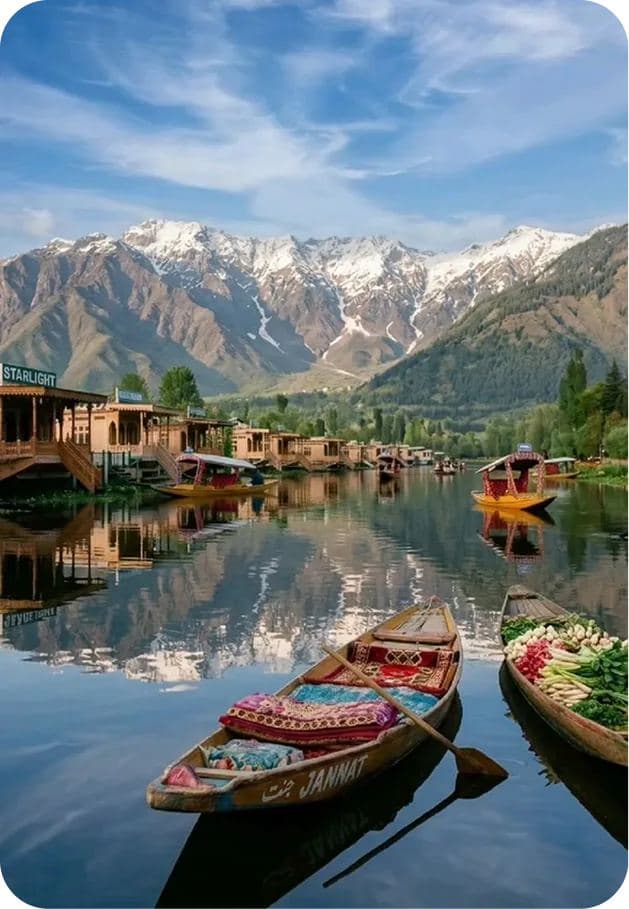
Srinagar Travel Guide: Dal Lake, Houseboats and the Old City
Srinagar is Kashmir's lakeside summer capital and the base for almost every trip to the valley, built around Dal Lake's carved wooden houseboats, Mughal gardens and an old city of wooden mosques and shrines. Most itineraries spend two nights here, at the start and end of the trip, with at least one night on a houseboat.
Travel guideDestinations
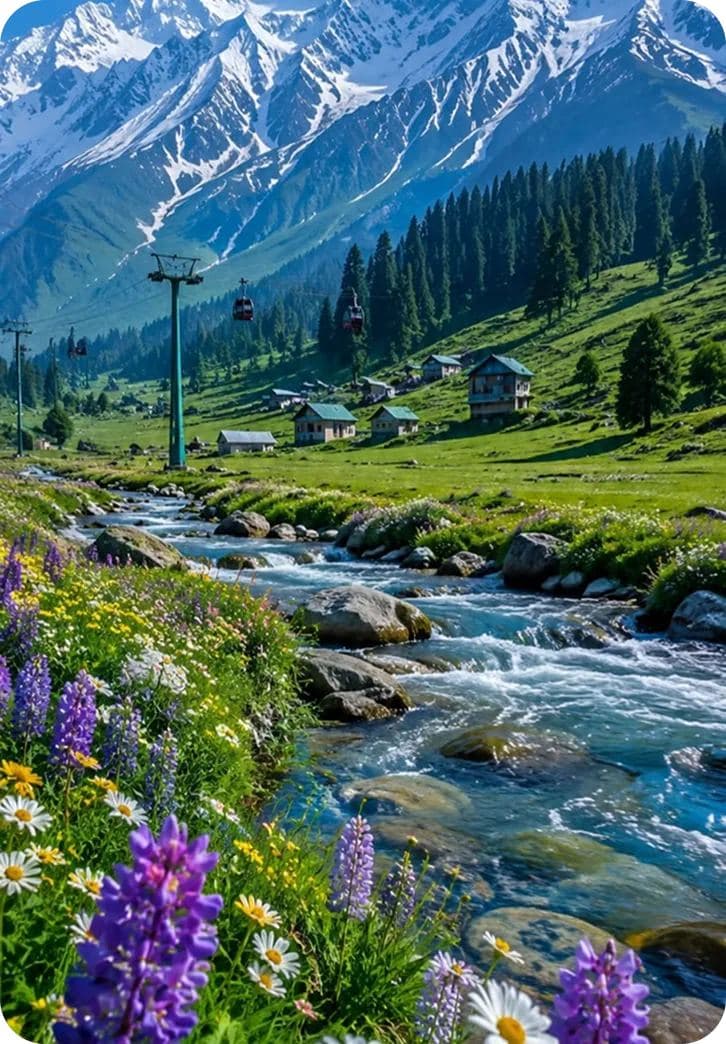
Gulmarg Travel Guide: Skiing, the Gondola and Alpine Meadows
Gulmarg is an alpine town about two hours from Srinagar, home to Asia's highest cable car, the Gulmarg Gondola, which climbs towards Apharwat Peak. It is one of India's few ski destinations from December to February and a meadow of wildflowers with the cable car running in summer.
Travel guideDestinations
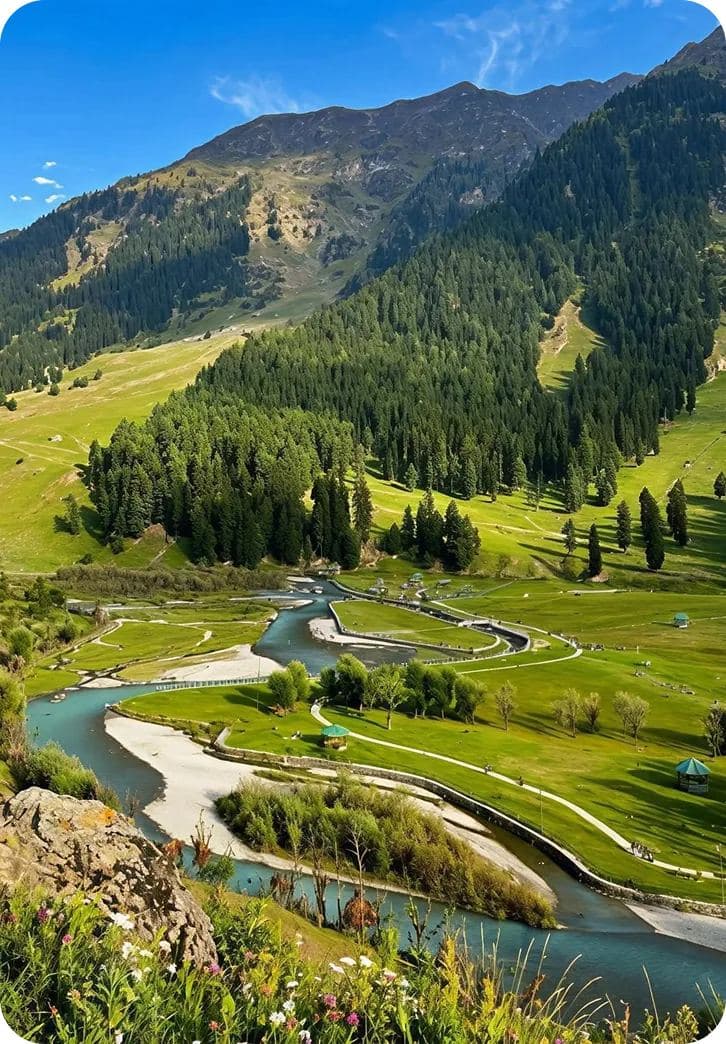
Pahalgam Travel Guide: The Lidder Valley and Aru Meadows
Pahalgam is the riverside town in Kashmir's Lidder Valley, with the meadows of Aru and Betaab beyond it. It suits gentle walks, log cabins and a slower pace, and most Kashmir itineraries give it one night alongside Gulmarg.
Travel guideDestinations
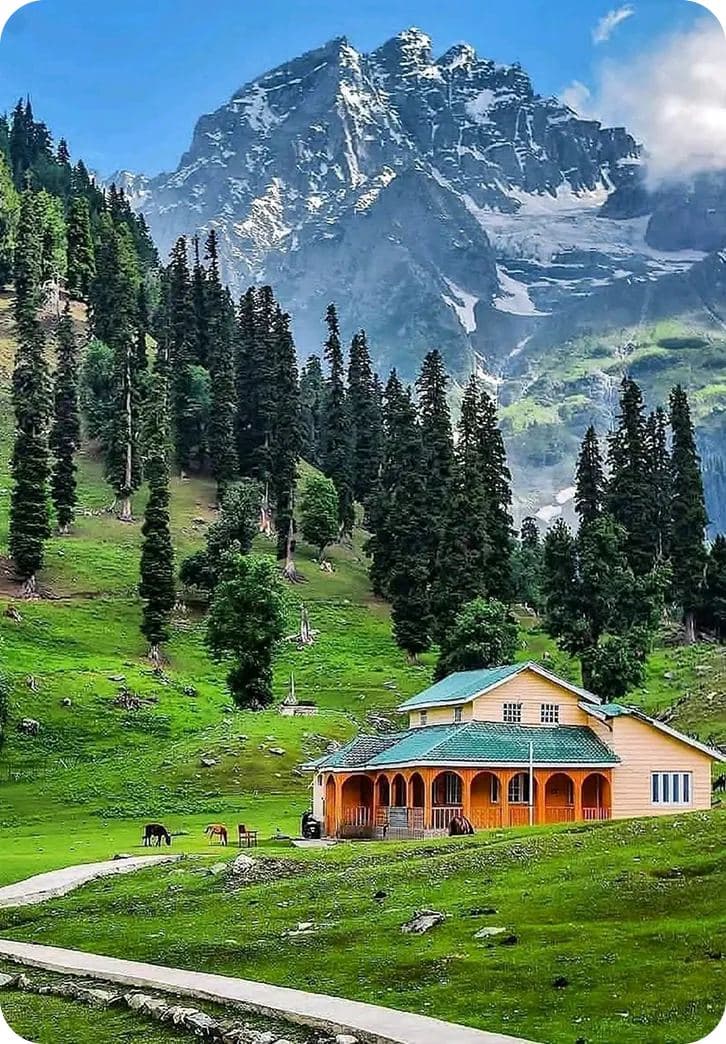
Sonmarg Travel Guide: The Meadow of Gold and the Road to Ladakh
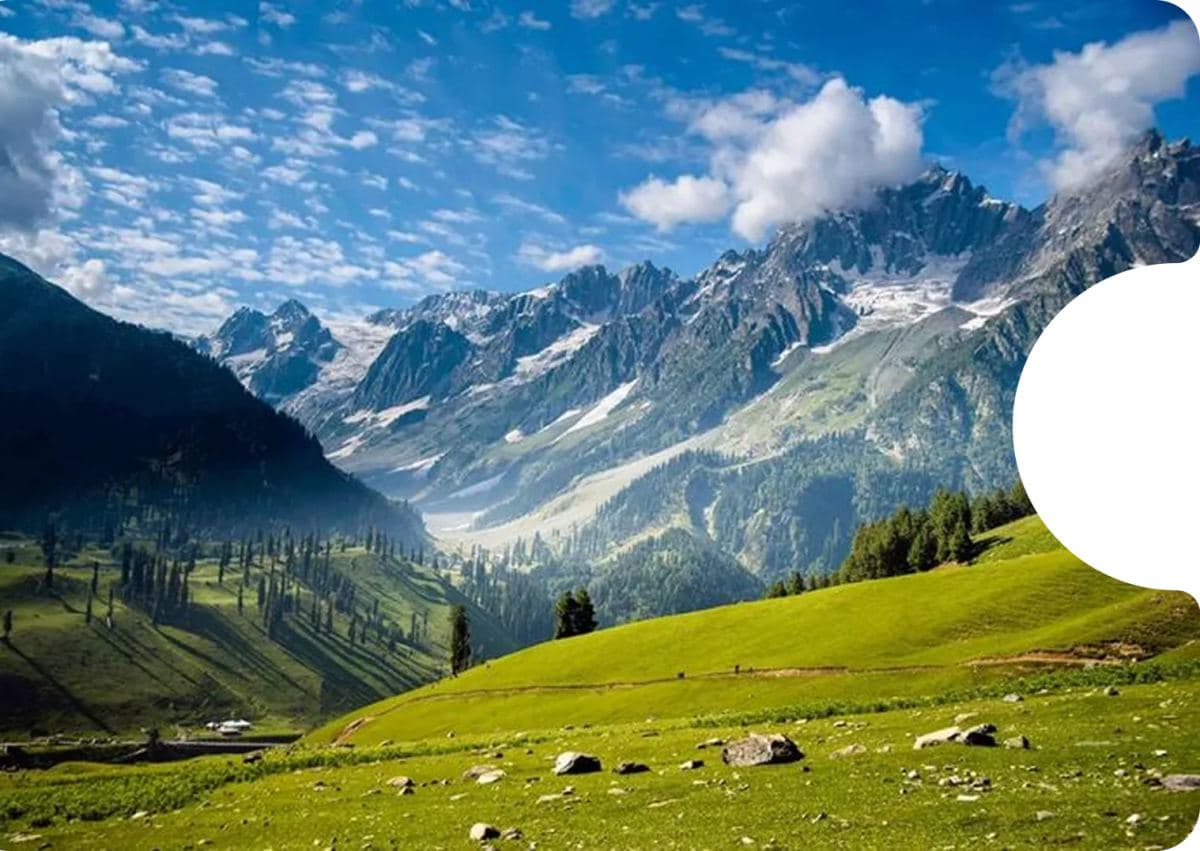
Sonmarg, the meadow of gold, is usually a summer day trip from Srinagar built around the Thajiwas glacier, and it also marks the start of the road on to Ladakh. The road is open only from late May to early October, so time your visit inside that window.
Travel guideDestinations
Best Time to Visit Kashmir: A Season-by-Season Guide
April to October is Kashmir's green season, with tulips peaking in early April, meadows at their best in June and July, and autumn colour arriving by mid-October. December to February brings snow, when Gulmarg becomes a ski destination. The Sonmarg and Ladakh roads are open only from late May to early October.
Not sure which to pick? Plan it with a specialist.
Tell us your dates and pace. You receive a written itinerary and quote first; nothing is charged to start planning.
Other destinations
Frequently asked questions
Is Kashmir safe for tourists?
This is the key question, and the honest answer has two sides. Tourism is operating at record levels and the main circuits, Srinagar, Gulmarg, Pahalgam and Sonmarg, function normally with a heavy security presence. At the same time, several governments, including the UK, currently advise against all travel to the valley, which can affect your insurance. Check your own government's current advice before booking.
What is the best time to visit Kashmir?
April to October is the green season: tulips peak in early April, the meadows are at their best in June and July, and autumn colour arrives in mid-October. December to February brings snow, and Gulmarg becomes a ski destination. The Sonmarg and Ladakh roads are open only from late May to early October.
How many days do you need in Kashmir?
Five to seven days is ideal for a relaxed first trip: Srinagar plus two valleys, usually Pahalgam and Gulmarg, with a Sonmarg day trip if you have time. Add two more days for quieter meadows like Yusmarg or Aru, or eight to ten days to combine Kashmir with Ladakh.
Should you stay on a houseboat?
At least one night, yes. A heritage houseboat on Dal or Nigeen Lake, waking to a shikara at dawn, is the classic Kashmir experience. Many trips split their Srinagar nights between a houseboat and a hotel on shore for a mix of atmosphere and convenience.
Can you combine Kashmir with Ladakh?
Yes. The Srinagar to Kargil to Leh drive, with a Kargil overnight, is one of India's great road journeys, open roughly June to early October. Outside those months the road is closed by snow and you would fly into Leh separately.
Do you need travel insurance for Kashmir?
Yes, and read it carefully. Beyond the usual reasons, weather closures and high-altitude issues are real, and travelling against your government's advisory can invalidate a standard policy. Check both your government's current advice and your policy's wording before you book.
About Kashmir Travel Guide: How to Plan a Trip to the Kashmir Valley
Kashmir, in the Himalayas, is famous for Srinagar's Dal Lake houseboats and the meadows of Gulmarg and Pahalgam. It is stunning but a sensitive region: check your government's travel advice and insurance before booking, as several advise against travel to the valley. Experience My India plans it with registered local services and flexible bookings.
Travel advisory: check before you book
Kashmir is a sensitive region and government travel advice varies. As of August 2026 the UK FCDO advises against all travel to the Kashmir Valley, including Srinagar, Gulmarg, Pahalgam and Sonmarg, and the US and Australia carry their own restrictions, particularly near the Line of Control. Travelling against your government's advice can invalidate your travel insurance. Advice changes, so check your own government's current advisory before you book, and ask us about flexible, refundable arrangements.
The Himalayan valley India calls its crown
Kashmir is the Himalayan valley that India calls its crown, and it is genuinely unlike anywhere else in the country: the one place that feels closer to Central Asia, with Mughal gardens, wooden mosques, Persian-influenced cuisine and a landscape that swings between mirror-still lakes and treeless alpine passes. Srinagar, the summer capital, is the base for almost every trip, its Dal Lake fringed with the carved wooden houseboats that are the enduring image of Kashmir. It is also a sensitive region with a complicated recent history, which is why this guide leads with the advisory above and treats safety honestly rather than glossing over it.
Where to go in Kashmir
Kashmir is compact, most places are within two to three hours of Srinagar, so a trip is really Srinagar plus a couple of valleys, chosen by season. Beyond the four places below, quieter meadows like Yusmarg and Doodhpathri make lovely day trips away from the crowds.
The lakeside summer capital: Dal Lake houseboats, Mughal gardens and your base for the valley. Best for shikara rides, gardens and orienting yourself.
An alpine town about two hours from Srinagar, home to Asia's highest gondola. Best for skiing in winter and meadows and the cable car in summer.
The riverside Lidder Valley town, with Aru and Betaab beyond. Best for gentle walks, log cabins and a slower pace.
The meadow of gold, with the Thajiwas glacier and the road on to Ladakh. Best for a summer day trip, late May to early October.
Dal Lake
Srinagar's heart: a shikara glides past floating gardens and the Char Chinar island, houseboats line the shore, and the Mughal gardens of Shalimar, Nishat and Chashma Shahi climb the hillsides above.
Is Kashmir safe? The honest answer
This is the question everyone asks, and it deserves a straight answer with both sides. On the ground, tourism is at record levels: the valley received well over sixteen million visitors in 2025, and the main circuits, Srinagar, Gulmarg, Pahalgam and Sonmarg, operate normally, with a heavy security presence, tourist helplines and hotels and houseboats running daily. On the other side, several Western governments, including the UK, currently advise against all travel to the valley, and travelling against that advice can invalidate your insurance. Both things are true at once. Our position is simple: we will not tell you it is risk-free, we will point you to your own government's current advice, and if you decide to travel we run the trip on established circuits with registered local services, our own operations team on the ground in Srinagar, and flexible bookings.
When is the best time to visit Kashmir?
April to October is the green season. Tulips peak in early April in Srinagar's tulip garden, the meadows are at their best in June and July, and autumn colour arrives in mid-October. December to February brings snow, when Gulmarg becomes one of India's few ski destinations and Srinagar runs on wood stoves. One timing rule matters: the Sonmarg and Ladakh roads are open only from late May to early October. One more practical note: during the Amarnath Yatra pilgrimage, usually July and August, convoy movement and security checks can slow the main highways, so build in buffer time if you travel then.
- Spring (Mar–Apr): tulip bloom, pleasant weather, perfect for gardens and walks.
- Summer (May–Aug): meadows at their best, and the Sonmarg and Ladakh roads open.
- Autumn (Sep–Oct): golden chinars, crisp air and stunning landscapes.
- Winter (Nov–Feb): snow-covered valleys, skiing in Gulmarg and cosy vibes.
How many days do you need in Kashmir?
Five to seven days is the sweet spot: two nights in Srinagar, then two of the valleys, usually Pahalgam and Gulmarg, with a Sonmarg day trip if time allows. One valley a day is the right pace here; mountain roads reward slowness. Add a couple of days for the quiet meadows, or extend to eight to ten days for the Kashmir to Ladakh road trip.
Day 1
Arrive in Srinagar
- Transfer to your houseboat or hotel on Dal Lake
- An evening shikara ride past the floating gardens
Day 2
Srinagar's gardens and old city
- The Mughal gardens of Shalimar, Nishat and Chashma Shahi
- The old city's wooden Jamia Masjid and the shrine of Hazratbal
- The hilltop Shankaracharya Temple
Day 3
Drive to Pahalgam
- The Lidder river valley
- Aru and Betaab meadows
Day 4
On to Gulmarg
- The Gulmarg Gondola towards Apharwat Peak
Day 5
Sonmarg day trip, return to Srinagar
- The Thajiwas glacier
- Drive back to Srinagar for the night
Day 6
Last morning in Srinagar
- A final look at the lake before departure, or continue on the Kashmir to Ladakh road
What does a Kashmir trip cost, where should you stay, and how do you get there?
Kashmir comes down to a few levers: your standard of houseboat and hotel, the season (peak snow and peak summer cost the most and book out earliest), whether you add the Ladakh road, and the private car and driver that a trip here really needs. Given the sensitivity, we build in flexible, refundable arrangements where we can. Experience My India quotes it to your dates and route.
In Srinagar the choice is a heritage houseboat on Dal or Nigeen Lake, all carved cedar and lake views, or a hotel on shore for convenience; most trips do a night of each. Pahalgam and Gulmarg have everything from family guesthouses to luxury resorts, and the quiet meadows offer simple homestays and cottages that are part of the charm.
Fly into Srinagar (SXR), which has direct flights from Delhi, Mumbai and other major cities; most trips route through Delhi. Once there, hire a car and driver for the whole trip: self-drive is not practical and shared cabs are unreliable for a timed itinerary. Roads to Gulmarg, Pahalgam and Sonmarg are smooth in summer and need checking in winter. One local tip: use a Jio or Airtel postpaid SIM, as many prepaid SIMs do not work in Jammu and Kashmir.
What is Kashmiri food like?
Kashmiri food is rich, slow-cooked and meat-heavy, built around the multi-course wazwan feast. Look for rogan josh, yakhni and gushtaba, Kashmiri pulao, nadru made from lotus stem, the flaky sheermal breads, and a cup of saffron-scented kahwa tea to finish. Buy your saffron and walnuts from a government emporium to avoid fakes.
- Rogan Joshlamb on the bone in a deep red chilli and fennel gravy.
- Gushtabapounded mutton meatballs in a pale yoghurt gravy.
- Kashmiri Pulaosaffron rice topped with pomegranate, nuts and raisins.
- Nadrusliced lotus stem in a white yoghurt gravy.
- Sheermalsaffron flatbread glazed golden and scattered with almonds.
How we plan Kashmir trips
Kashmir is the one destination where how you book matters as much as where you go. Our approach here is honesty first: we give you the real advisory picture rather than the brochure version, and we do not pretend the sensitivity away. It also helps that we are not running Kashmir by remote control: our local operations team is based on the Dal Lake itself, at Hotel Heaven Canal in Srinagar, so there is always someone on the ground who knows today's road and weather rather than last week's. For travellers who have checked their own government's advice and their insurance and decide to go, we run the trip responsibly, with local Kashmiri guides, registered transport and houseboats, established circuits, real-time road updates, and flexible, refundable arrangements in case plans need to change.
Experience My India was founded in 2018, is based in Delhi NCR and runs a local operations office on the Dal Lake in Srinagar (Hotel Heaven Canal), from where its Kashmir trips are managed. It has hosted more than 50,000 guests from over 35 countries, with in-house specialists, a private transport fleet and a network of local guides across India. Founder Gurudutt Kaushal (IIT Jodhpur; Outlook India 40 Under 40) built the company on on-the-ground local guiding.
Why book with Experience My India
Government-approved operator
Approved by the Ministry of Tourism, Government of India
500+ vetted local guides
35+ destination specialists plan every trip by hand.
Human help, every day
Mon–Sun, 9:00 AM – 9:00 PM IST · +91 73022 65809
No payment until you approve
You receive a written quote first; nothing is charged to start planning.
Plan a trip
Tailor-made quote from a specialist