
Last updated:
Kumbh Mela: a practical guide
By Experience My India Editorial Team
Destination specialists and licensed local guides
Kumbh Mela is a major Hindu pilgrimage festival held on a rotating basis at four sacred river sites in India — Prayagraj, Haridwar, Nashik and Ujjain — with a full cycle returning to the same site roughly every twelve years, and an Ardh (half) Kumbh at the midpoint, roughly every six years, at Prayagraj and Haridwar. The most recent Maha Kumbh was held at Prayagraj in early 2025, drawing enormous numbers of pilgrims for ritual bathing at the sacred river confluence. Exact future dates are announced by the respective state administrations rather than being fixed on a simple calendar, so always confirm current dates before planning travel.
What is Kumbh Mela?
Kumbh Mela is one of the largest religious gatherings on earth, a Hindu pilgrimage festival centred on ritual bathing at a sacred river site, believed to cleanse sins and aid spiritual liberation. It draws pilgrims, ascetics (sadhus) from across India's monastic orders, and a growing number of international visitors, all converging on one river site over a period of weeks.
The festival is not held in one fixed place every year. It rotates among four sacred sites, and which one hosts it in a given cycle depends on planetary and astrological positions that are part of the tradition's own calendar.
The four sites and the roughly 12-year cycle
Kumbh Mela rotates among four locations, each on a sacred river: Prayagraj (formerly Allahabad), Uttar Pradesh, at the confluence of the Ganges, Yamuna and the mythical Sarasvati; Haridwar, Uttarakhand, on the Ganges as it enters the plains; Nashik, Maharashtra, on the Godavari; and Ujjain, Madhya Pradesh, on the Shipra. A full cycle returns to any one site roughly every twelve years, so in practice each site hosts a Kumbh Mela around once every twelve years, with the four events spread across that broader cycle.
At the roughly six-year midpoint of that cycle, an Ardh ("half") Kumbh Mela is held, specifically at Prayagraj and Haridwar, on a smaller scale than the full Maha Kumbh but still drawing very large crowds. The largest single gathering, the Maha Kumbh, occurs at Prayagraj at the completion of the full cycle, and the most recent Maha Kumbh at Prayagraj was held in early 2025, one of the largest human gatherings ever recorded.
Exact dates for any future Kumbh Mela are announced by the respective state administration and religious authorities closer to the event, based on the tradition's astrological calculations — they are not simply the previous date plus twelve or six years, so always check current official announcements rather than relying on an estimate.
What actually happens at Kumbh Mela
At the heart of the festival are a series of designated bathing dates, considered the most auspicious days of the mela, when pilgrims enter the river at dawn for a ritual bath. The most dramatic of these is the procession of the akharas, organised orders of sadhus, who process to the river in a specific, ranked sequence to bathe first, often in striking ceremonial dress or, for some ascetic orders, none at all.
Beyond the bathing itself, the mela grounds become a temporary city: a vast tented encampment with pontoon bridges, food stalls, religious discourses, cultural performances and a substantial temporary administration to manage sanitation, transport and crowd flow for what is, on peak days, one of the largest concentrations of people anywhere on the planet at any one time.
Crowd and safety guidance
Kumbh Mela's scale is genuinely unlike almost any other travel experience, and a sensible approach is built around that reality rather than around specific numbers, which vary hugely by year and by day.
- The main bathing dates are the busiest by a wide margin — visiting the mela grounds on a non-bathing date gives a far calmer sense of the festival's atmosphere while still being genuinely memorable.
- Crowd density on peak bathing days can be extreme; agree a fixed meeting point with anyone you are travelling with in case you are separated, since phone networks can be overloaded.
- Wear footwear that is easy to keep on in a crowd and comfortable for long periods of standing and walking; losing a shoe in a dense crowd is a common minor mishap.
- Follow the instructions of police and mela administration staff, who manage designated routes and timed access specifically to prevent dangerous crowd crushes.
- Accommodation at and around the mela grounds ranges from basic pilgrim camps to organised tented accommodation; book well ahead, as capacity is genuinely limited relative to the numbers attending.
- Water safety at the bathing ghats deserves respect — currents and depth vary, and it is sensible to bathe only at designated, supervised areas.
Deciding whether Kumbh Mela is right for your trip
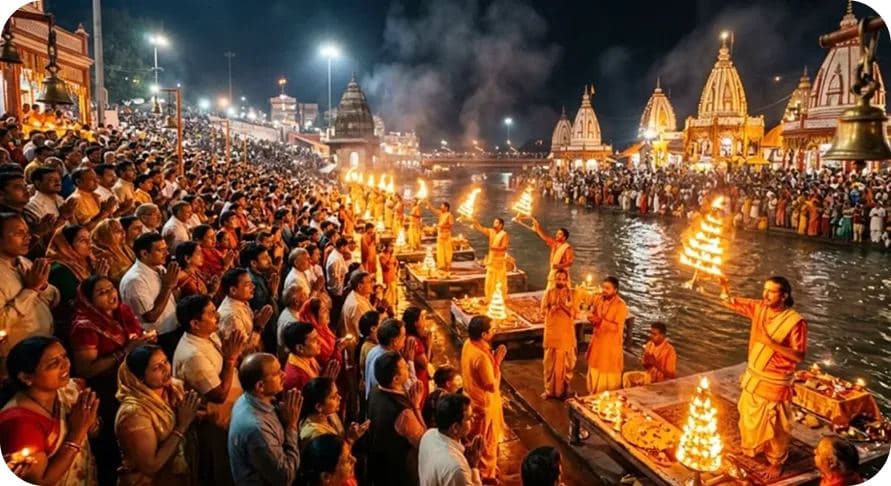
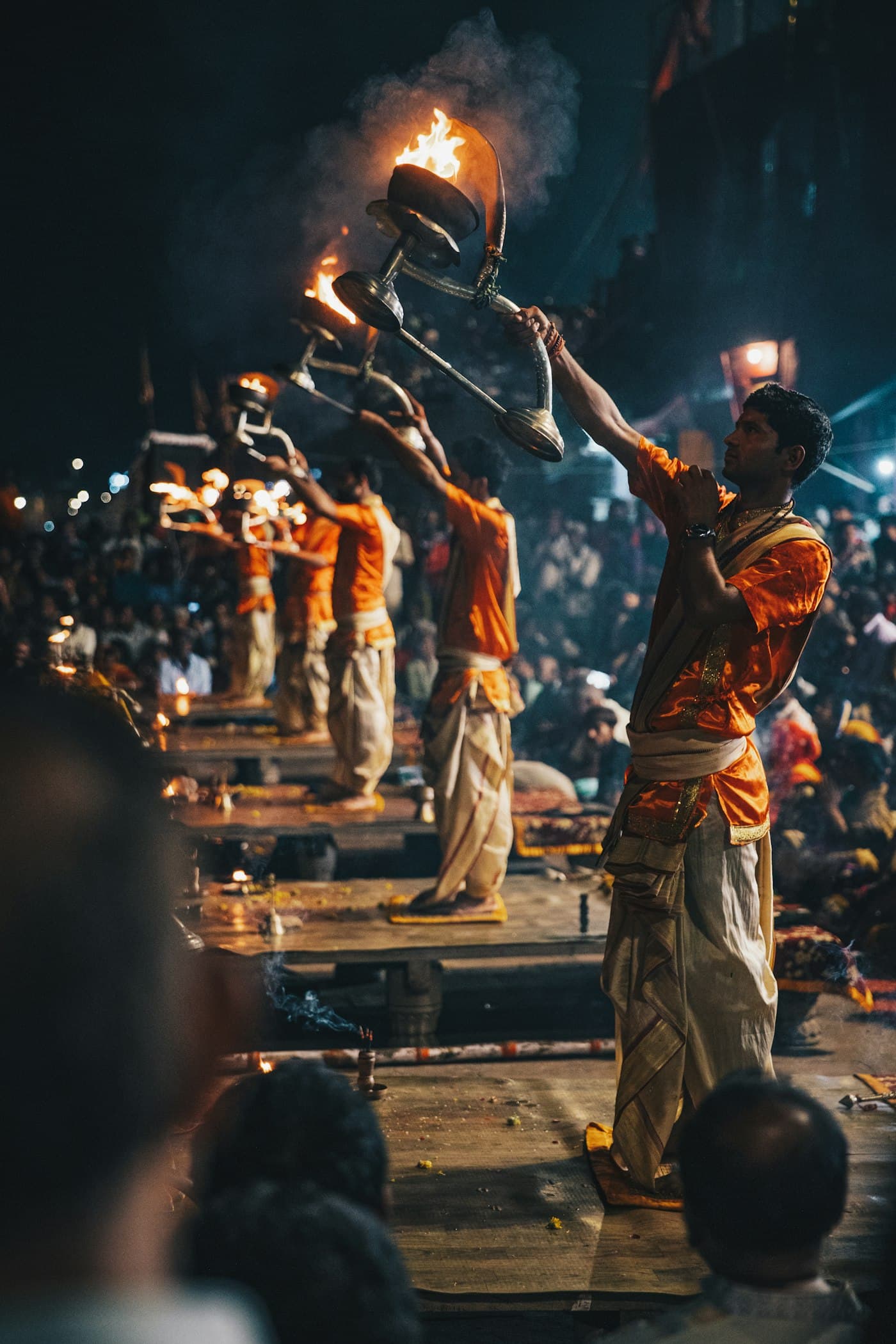
Kumbh Mela is an extraordinary thing to witness, but it is not a comfortable or easy travel experience by conventional standards, and it suits some travellers far better than others. If you are drawn to the spectacle, the devotion and the sheer scale of it and are prepared for crowds, basic facilities in places, and a physically demanding few days, it leaves a lasting impression few other events can match. If your priority is comfort, personal space or a predictable schedule, a quieter pilgrimage experience — the daily Ganga Aarti at Varanasi, for instance — delivers a related but far gentler experience of the same river tradition.
For those who do want to attend, we recommend building in flexibility: extra days either side of your planned bathing date, and a realistic view that plans on the ground can shift with very little notice given the scale of the event.
Frequently asked questions
What is the difference between Kumbh Mela, Ardh Kumbh and Maha Kumbh?
Kumbh Mela is the general name for the festival at any of its four rotating sites. Ardh (half) Kumbh is held at the roughly six-year midpoint of the full cycle, specifically at Prayagraj and Haridwar, on a smaller scale. Maha Kumbh is the largest gathering, held at Prayagraj at the completion of the full roughly twelve-year cycle, such as the one held in early 2025.
Where and when is the next Kumbh Mela?
Dates and the host site for any future Kumbh Mela are announced by the respective state administration closer to the event, based on the tradition's astrological calculations. We advise checking official announcements rather than relying on an estimated date, and can help you plan once dates are confirmed.
Is Kumbh Mela safe to attend as a foreign visitor?
It can be a safe and rewarding experience with careful planning around the crowd scale: choosing your dates deliberately, following official crowd-management instructions, and building in flexibility. It is not a low-key or predictable travel experience, and that is part of what makes it remarkable.
Do I have to bathe in the river to attend?
No, many visitors attend to witness the festival's atmosphere, the akhara processions and the temporary tented city without bathing themselves. Ritual bathing is a devotional choice, not a requirement for visiting.
What is the best way to experience Kumbh Mela without the biggest crowds?
Visiting on a non-peak, non-bathing date within the festival period gives a genuinely calmer experience of the atmosphere while avoiding the most extreme crowd densities of the main bathing days.
How does Kumbh Mela relate to the Ganga Aarti at Varanasi?
Both are expressions of the same devotional relationship with the Ganges, but at very different scales. The Ganga Aarti happens every evening at Varanasi and is accessible year-round; Kumbh Mela is a periodic mass gathering at one of four rotating sites, on a scale unlike almost anything else.
Experiences to book
Pilgrimage
Char Dham Yatra tour
Private tour
Pilgrimage
Mathura and Vrindavan tour
Private tour
Pilgrimage
Varanasi Ganga Aarti tour
Private tour
Why book with Experience My India
Government-approved operator
Approved by the Ministry of Tourism, Government of India
500+ vetted local guides
35+ destination specialists plan every trip by hand.
Human help, every day
Mon–Sun, 9:00 AM – 9:00 PM IST · +91 73022 65809
No payment until you approve
You receive a written quote first; nothing is charged to start planning.
Browse by theme
Plan a trip
Tailor-made quote from a specialist