
Last updated:
India's Festivals, Season by Season
By Experience My India Editorial Team
Destination specialists and licensed local guides
India's festival calendar runs on both fixed and lunar dates. Republic Day (26 January) and Independence Day (15 August) are fixed; Holi, Diwali, Durga Puja and most others follow the lunar calendar and shift year to year, so check the current year's dates before you book around one.
January to March
- Makar Sankranti — a harvest and kite festival, 14 January (fixed date).
- Republic Day — 26 January (fixed date).
- Pongal — Tamil Nadu's harvest festival, mid-January.
- Maha Shivratri — a major festival honouring Shiva (date varies, usually February or March).
- Holi — the festival of colour, India's best-known spring festival (date varies, usually March).
April to June
- Baisakhi — Punjab's spring harvest festival, 13 April (fixed date).
- Ram Navami — marking the birth of Lord Rama (date varies).
- Buddha Purnima — marking the birth of the Buddha, significant in Ladakh and other Buddhist regions (date varies).
July to September
- Rath Yatra — Puri's chariot festival (date varies, usually June or July).
- Independence Day — 15 August (fixed date).
- Raksha Bandhan — a festival celebrating siblings (date varies).
- Janmashtami — marking the birth of Lord Krishna, especially significant in Mathura and Vrindavan (date varies).
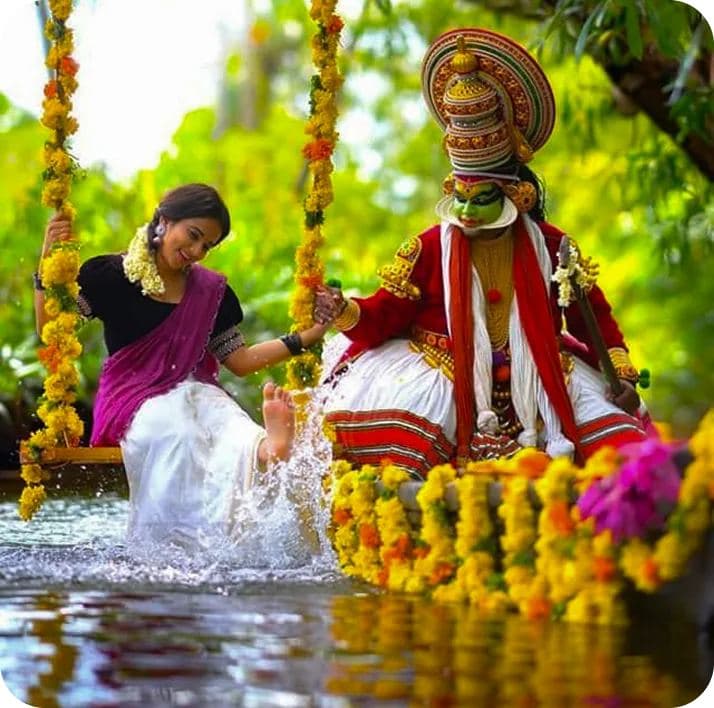
- Onam — Kerala's major harvest festival (date varies, usually August or September).
- Ganesh Chaturthi — widely celebrated, especially in Maharashtra (date varies).
October to December
- Gandhi Jayanti — 2 October (fixed date).
- Navratri and Dussehra — major festivals across much of the country (dates vary, usually October).
- Durga Puja — especially significant in Kolkata and West Bengal (date varies).
- Diwali — the festival of lights, India's biggest travel period (date varies, usually late October or November).
- Pushkar Camel Fair — a major livestock fair and festival in Rajasthan (date varies, usually November).
- Guru Nanak's birthday — significant for the Sikh community (date varies).
- Christmas — 25 December (fixed date).
- New Year's Eve and Day — 31 December to 1 January (fixed dates), marked with major celebrations in Goa and other tourist hubs.
How festivals affect travel planning
A festival can be a highlight worth timing your trip around, or a reason to book well ahead of everyone else who had the same idea — hotels, trains and flights get tight around Diwali, Holi and the October-to-November festival stretch especially. Check the current year's dates before you commit, since most of these move each year with the lunar calendar.
Frequently asked questions
What are the biggest festivals in India?
Diwali and Holi are the best known nationally, alongside major regional festivals such as Durga Puja, Onam and Ganesh Chaturthi.
Which Indian festivals have fixed dates?
Republic Day (26 January), Baisakhi (13 April), Independence Day (15 August), Gandhi Jayanti (2 October), and Christmas (25 December).
Does Diwali have a fixed date?
No — it follows the lunar calendar and usually falls in late October or November, shifting each year.
Should I plan my India trip around a festival?
You can, but book well ahead — festivals are some of the busiest, most expensive travel periods of the year.
Related guides
Why book with Experience My India
Government-approved operator
Approved by the Ministry of Tourism, Government of India
500+ vetted local guides
35+ destination specialists plan every trip by hand.
Human help, every day
Mon–Sun, 9:00 AM – 9:00 PM IST · +91 73022 65809
No payment until you approve
You receive a written quote first; nothing is charged to start planning.
Browse by theme


Plan a trip
Tailor-made quote from a specialist